
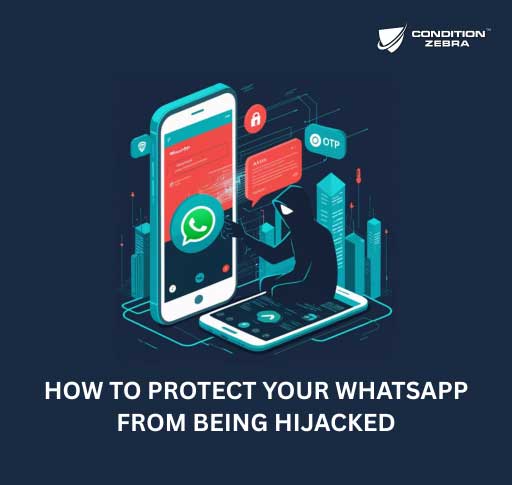
In 2025, there has been a surge in hacking incidents involving WhatsApp accounts in Malaysia. While many users assume they will not fall for such scams, attackers continue to succeed by exploiting trust and simple human error.
As a cybersecurity leader based in Malaysia, Condition Zebra has witnessed this trend growing rapidly — and it’s time for organisations to treat it as a serious security concern.
The real reason behind WhatsApp hacking
WhatsApp is widely used for day-to-day communication across the country. Its popularity makes it attractive to cybercriminals who rely on two key weaknesses:
- Most users never activate WhatsApp’s enhanced security features
- Social engineering remains extremely effective in Malaysia
The result? Attackers can often gain access without any technical hacking.
Methods Used to Hijack WhatsApp Accounts
1. Impersonation Scams
Criminals pose as friends, relatives, government agencies, or customer service teams to request verification codes.
2. Fake Offers and Rewards
Messages promising jobs, discounts, or prizes trick victims into “verifying” their accounts.
3. Unauthorised SIM Transfers
Attackers convince telcos to move a victim’s number to a new SIM card.
4. Malicious APK Installations
Untrusted apps steal SMS messages — including verification codes.
5. Hacking Risks
Some skilled hackers are capable of taking over a WhatsApp account without the need for the OTP. If a WhatsApp account is tied to an expired number, it may be easier for someone else to take over.
The Real Consequences of an Account Takeover
Once attackers gain control, they can:
- Request money from your contacts
- View private chats and shared files
- Attempt to break into other accounts linked to your phone number
- Conduct fraudulent activities under your identity
For businesses, the damage may be even greater — fake invoices, leaked data, and loss of customer trust.
Why Malaysians Fall for These Attacks
Based on our experience, we realise that the issue is not a lack of awareness but overconfidence among users. Many users underestimate the capability of the attackers and overestimate their ability to identify scams.
Attackers, however, are far more methodical than most people expect. Cybercriminals often observe their targets before initiating an attack. They are patient and take their time to craft messages designed to provoke fear or urgency, such as:
- “Suspicious activity has been detected on your number.”
- “Your account will be disabled within 24 hours unless you verify.”
Messages like these are crafted to trigger panic. Once a victim feels pressured, they are more likely to act without thinking — clicking a malicious link, providing personal details, or sharing a one-time password.
How to Protect Yourself
A few proactive steps can significantly reduce risk:
✅ Enable WhatsApp two-step verification
Adds an extra PIN to protect your account.
✅ Link and verify your email address
Strengthens recovery options if your number becomes inaccessible.
❌ Never share verification codes
No legitimate service will ever ask for them.
❌ Avoid installing unverified apps
Especially APK files shared through chat.
✅ Set a SIM-card PIN
Helps prevent unauthorised SIM transfers.
🏢 For Businesses:
Implement regular cybersecurity awareness training so employees can recognise impersonation and phishing attempts.
Conclusion
WhatsApp’s widespread use makes it an attractive entry point for cybercriminals. With tactics ranging from social engineering to SIM manipulation and malicious apps, attackers succeed largely because they exploit human behaviour.
Strong protection comes from a mix of awareness, consistent security practices, and staying informed about evolving risks. As long as human behaviour remains the easiest path to exploit, cybercriminals will continue to take advantage of it.
Ultimately, this challenge extends beyond technology — it’s about preparedness.
And Malaysia needs to strengthen that readiness now.
Condition Zebra helps organisations strengthen their cybersecurity resilience through:
- Vulnerability Assessment & Penetration Testing (VAPT)
- Managed Detection & Response (MDR)
- Security Awareness Training
As cyber threats evolve, so must your defences.
Contact us for a Free consultation with our team to learn how our solutions can protect your IT infrastructure and valuable data.