Datacenter Risk Assessment (DCRA)
Datacenter Risk Assessment Overview
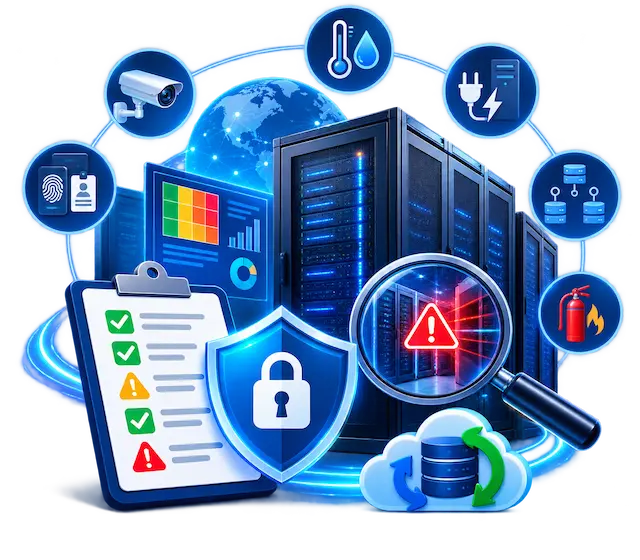
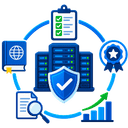
Datacenter Risk Assessment provides a comprehensive evaluation of your datacenter’s security, availability, and operational resilience. We assesses physical infrastructure, environmental controls, systems, access management, data protection, redundancy, and recovery capabilities to identify risks that could disrupt critical operations and provides actionable recommendations to strengthen resilience.

DISCOVER
Understand Your Datacenter Environment
Identify critical assets, infrastructure, systems, dependencies, operational requirements, and existing security and resilience controls.
VALIDATE
Evaluate Resilience & Readiness
Determine whether existing controls, redundancy, backup, recovery, and security measures can effectively protect critical datacenter operations.
ASSESS
Evaluate Critical Controls
Review physical security, environmental controls, infrastructure, systems, access management, backup, redundancy, and disaster recovery capabilities.
PRIORITISE
Assess Risk & Business Impact
Evaluate identified risks based on severity, likelihood, operational impact, and business criticality to prioritise the areas requiring attention.
IDENTIFY
Find Risks & Control Gaps
Uncover vulnerabilities, single points of failure, excessive access, configuration weaknesses, environmental risks, and other operational security gaps.
STRENGTHEN
Improve Datacenter Resilience
Provide actionable recommendations to strengthen physical and logical security, availability, redundancy, data protection, recovery, and overall operational resilience.
Physical Security • Environmental Controls • Infrastructure & Systems • Access & Identity • Backup & Disaster Recovery
Reduce Downtime • Protect Critical Data • Strengthen Physical Security • Improve Recovery • Maintain Business Continuity
Scope of Assessment
We assess datacenter risks across six critical areas of your physical, operational, and technology environment:
Physical Security
Assess access control systems, CCTV coverage, security procedures, visitor management, and server room or rack access to protect critical infrastructure from unauthorised physical access.
Environmental Controls
Evaluate power and UPS systems, cooling, temperature management, fire detection and suppression, humidity, flood protection, and other environmental safeguards.
Infrastructure & Systems
Review servers, virtualisation platforms, storage systems, network devices, configurations, and patch management to identify security and operational weaknesses.
Access & Identity Management
Assess privileged access, user permissions, segregation of duties, MFA, authentication controls, logging, and audit trails to reduce unauthorised access risks.
Backup & Data Protection
Evaluate backup policies, backup frequency, offsite and cloud backups, storage protection, and data recovery capabilities to minimise the risk of data loss.
Disaster Recovery & Resilience
Review disaster recovery plans, redundancy, recovery testing, RTO and RPO readiness, and continuity measures to ensure critical systems can recover from unexpected disruptions.
Our Methodology
Discovery
Understand datacenter design, assets, and business dependencies
Assessment
Evaluate physical, environmental, and logical controls
Analysis
Identify risks, vulnerabilities, and operational gaps
Reporting
Provide detailed findings with risk ratings
Recommendations
Deliver actionable remediation and improvement plans
Key Benefits
- Reduced Risk of Downtime
Ensure continuous availability of critical systems - Improved Data Protection
Strengthen backup and recovery capabilities - Enhanced Physical Security
Prevent unauthorized access to sensitive infrastructure - Stronger Compliance Posture
Align with ISO 27001, NIST, and regulatory requirements - Better Operational Resilience
Prepare for unexpected disruptions and disasters
Frequently Asked Questions (FAQs)
1. What is a Datacenter Risk Assessment (DCRA) ?
A Datacenter Risk Assessment is a structured evaluation of your datacenter’s physical security, environmental controls, infrastructure, access management, data protection, and operational resilience to identify risks that could impact critical systems and business operations.
2. What areas are covered during a DCRA ?
The assessment can cover physical security, environmental controls, infrastructure and systems, access and identity management, backup and data protection, and disaster recovery and resilience.
3. Why does my organisation need a Datacenter Risk Assessment ?
DCRA helps identify security weaknesses, operational risks, single points of failure, inadequate redundancy, access control gaps, and recovery weaknesses before they result in downtime, data loss, or business disruption.
4. Will the assessment disrupt our datacenter operations ?
The assessment is designed to minimise disruption to normal operations. Any testing that could potentially affect production systems or availability will be carefully scoped and agreed upon beforehand.
5. What will we receive after the assessment ?
You will receive an executive summary, detailed risk assessment report, physical and logical security findings, risk prioritisation, and an actionable remediation roadmap to strengthen your datacenter environment.
6. How often should a Datacenter Risk Assessment be conducted ?
DCRA should be conducted periodically and following significant changes such as infrastructure upgrades, datacenter migrations, major system deployments, changes to critical services, or before important compliance and audit assessments.
Why Choose Condition Zebra
Local cybersecurity expertise backed by experienced consultants, comprehensive datacenter risk assessments, industry best practices, and actionable recommendations to help organisations strengthen security, improve operational resilience, and protect critical infrastructure.
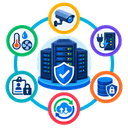
Holistic Assessment Approach
Evaluate your datacenter across physical, environmental, infrastructure, access, data protection, and recovery layers to provide a comprehensive view of security and operational risks.
Industry Best Practices
Assess controls against recognised security frameworks, industry standards, and established best practices to identify gaps and strengthen your datacenter’s security and resilience.

Experienced Consultants
Experienced cybersecurity professionals with hands-on expertise in datacenter environments, infrastructure security, risk assessment, and operational resilience across complex IT environments.

Actionable Insights