
External Attack Surface Management (EASM)

External Attack Surface Management Overview
Discover Your Exposure. Understand Your Risk. Reduce Your Attack Surface.
External Attack Surface Management continuously discovers and monitors your organisation’s internet-facing assets, helping uncover unknown systems, vulnerabilities, misconfigurations, cloud exposures, and other weaknesses before attackers can exploit them.

DISCOVER
External Assets
Continuously identify domains, IPs, applications, cloud resources, internet-facing systems, and unknown assets.
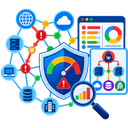
ASSESS
Risk & Attack Paths
Score and prioritise exposures while mapping relationships between assets to understand potential attack paths.

MONITOR
Attack Surface Changes
Track your external environment for newly exposed assets, services, infrastructure changes, and emerging areas of exposure.
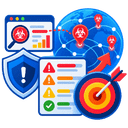
PRIORITISE
Threat-Informed Risk
Correlate exposures with active threats and real-world intelligence to identify which assets and weaknesses require attention first.

IDENTIFY
Vulnerabilities & Exposures
Detect open ports, insecure configurations, outdated software, vulnerabilities, and cloud misconfigurations across exposed assets.

REDUCE
External Attack Surface
Turn exposure insights into prioritised remediation actions that help continuously reduce your organisation’s external attack surface.
Know What’s Exposed Before Attackers Do.
Continuous Discovery • External Visibility • Exposure Detection • Risk Prioritisation • Threat Intelligence • Attack Surface Reduction
The Threat Landscape
As organisations expand across cloud platforms, internet-facing applications, remote infrastructure, third-party connections, and digital services, their external attack surface continues to grow and change. Unknown assets, shadow IT, open ports, vulnerable systems, and security misconfigurations can create hidden entry points that attackers actively search for and exploit.
Without continuous visibility, organisations may struggle to know what is exposed, where vulnerabilities exist, and which risks require immediate attention. External Attack Surface Management continuously discovers and monitors internet-facing assets, identifies exposures, maps potential attack paths, and applies risk and threat context to help organisations prioritise weaknesses and reduce their external attack surface before attackers can take advantage of it.

Attack Surface Growth
YOUR EXTERNAL ATTACK SURFACE IS CONSTANTLY CHANGING
Unknown & Exposed Assets
New domains, cloud resources, applications, services, and internet-facing systems can appear over time. Without continuous discovery, unknown or unmanaged assets may remain exposed and create potential entry points for attackers.
Hidden Exposure
WHAT YOU DON’T KNOW CAN INCREASE YOUR RISK
Vulnerabilities & Misconfigurations
Open ports, outdated software, insecure configurations, and cloud misconfigurations can expose critical systems to attack. Continuous assessment helps identify these weaknesses before attackers have an opportunity to exploit them.
Threat Context
NOT EVERY EXPOSURE PRESENTS THE SAME LEVEL OF RISK
Risk Prioritisation
Understanding severity alone is not enough. EASM combines risk scoring, attack surface mapping, and threat intelligence to identify potential attack paths and prioritise exposures based on their risk and real-world threat activity.
Continuous
DISCOVER • MONITOR • PRIORITISE • REDUCE
External Attack Surface Management
EASM continuously discovers and monitors internet-facing assets, detects vulnerabilities and exposures, maps relationships, and applies threat intelligence to help organisations understand their external attack surface and reduce potential attack vectors before they are exploited.
Key External Attack Surface Management Capabilities
🔴 1. Asset Discovery & Visibility
Continuously discover and maintain visibility across your organisation’s external digital footprint.
-
- Identify domains, IPs, applications, cloud resources, and internet-facing systems
- Detect shadow IT and previously unknown assets
- Maintain an up-to-date external asset inventory
- Monitor changes and newly exposed services or assets
- Identify domains, IPs, applications, cloud resources, and internet-facing systems
🔴 2. Exposure & Vulnerability Management
Identify security weaknesses across internet-facing infrastructure before attackers can exploit them.
-
- Detect open ports, insecure services, and vulnerabilities
- Identify outdated software and security misconfigurations
- Detect cloud storage, access control, and integration exposures
- Monitor public cloud and external service risks
- Prioritise exposures based on severity and potential impact
🔴 3. Risk Intelligence & Attack Surface Analysis
Understand how exposures relate to real-world threats and where your greatest risks exist.
-
- Assign risk scores to assets and vulnerabilities
- Map relationships between infrastructure, assets, and services
- Identify potential attack paths
- Correlate exposures with active threats and attacker activity
- Apply threat intelligence to improve risk prioritisation
🔴 4. Reporting, Prioritisation & Improvement
Turn attack surface data into actionable insights that support remediation and continuous improvement.
-
- Prioritise remediation based on risk and impact
- Provide executive dashboards and risk summaries
- Deliver technical reporting to support remediation
- Track exposure and risk trends over time
- Measure improvements in your external security posture
External Attack Surface Coverage

Internet-Facing Infrastructure
Monitor domains, IP addresses, internet-facing systems, services, and applications to identify exposed assets and potential security weaknesses.

Third-Party & Vendor-Connected Assets
Monitor externally connected vendors, suppliers, partners, and third-party assets that may introduce additional exposure or supply chain risk.

Cloud Platforms & SaaS Applications
Discover and monitor externally exposed cloud resources, SaaS applications, storage, services, and cloud-based infrastructure.

Hybrid & Distributed Environments
Maintain visibility across interconnected on-premises, cloud, remote, and distributed infrastructure as your external attack surface evolves.

On-Premises Systems with External Exposure
Identify servers, applications, network devices, and other on-premises systems that are accessible from the internet.

Unknown & Shadow IT Assets
Discover unmanaged, forgotten, or previously unknown internet-facing assets that may exist outside your organisation’s established security visibility.
Managed External Attack Surface Management
What Our MSSP Adds on Top of EASM Technology
We transforms EASM visibility into a fully managed attack surface reduction programme through expert validation, risk prioritisation, and actionable remediation.
1. Monitor & Prioritise Exposure
Continuously validate your external attack surface and focus attention on the exposures that present the greatest risk.
🔴 Continuous Monitoring & Validation
- Validate discovered assets and exposures
- Reduce false positives and irrelevant findings
- Maintain accurate visibility as the attack surface changes
✅ Value: Accurate and reliable external visibility.
🔴 Risk Prioritisation & Remediation Guidance
- Identify high-risk exposures
- Prioritise findings based on potential impact
- Provide actionable remediation guidance
✅ Value: Focus on critical risks first.
🔴 Threat Correlation & Contextual Analysis
- Correlate exposures with active threat activity
- Identify assets more likely to be targeted
- Add real-world threat context to prioritisation
✅ Value: Better prioritisation and faster action.
2. Manage & Reduce Attack Surface
Turn visibility into ongoing action that reduces exposure and improves accountability.
🔴 Asset Ownership & Governance
- Map assets to owners and business functions
- Establish accountability for exposed assets
- Support remediation ownership and follow-up
✅ Value: Improved operational control.
🔴 Exposure Reduction & Risk Management
- Track attack surface reduction over time
- Monitor remediation progress
- Recommend ongoing security improvements
✅ Value: Measurable reduction in external exposure.
🔴 Third-Party & External Risk Oversight
- Monitor vendors and external dependencies
- Identify potential supply chain exposures
- Improve visibility beyond your own environment
✅ Value: Reduced third-party and external risk.
3. Report & Govern
Provide clear visibility into attack surface risk, remediation progress, and security posture.
🔴 Reporting, Compliance & Visibility
- Executive reporting on external risk posture
- Track exposure and remediation trends
- Support governance, compliance, and audit requirements
✅ Value: Clear visibility and improved audit readiness.
External Attack Surface Management vs Managed EASM (MSSP)
External Attack Surface Management technology helps discover, monitor, and identify risks across your organisation’s external attack surface, while Managed EASM (MSSP) adds expert validation, threat context, risk prioritisation, remediation guidance, and continuous exposure management—turning attack surface visibility into actionable and measurable risk reduction.
Capability Area
Technology vs MSSP- Primary Role
- Asset Discovery
- Exposure Detection
- Risk Scoring
- Threat Correlation
- Alerting
- Remediation Guidance
- Third-Party Risk Visibility
- Reporting
- Operational Responsibility
- Outcome
Option 1
EASM (Technology)- Discovers & monitors assets
- Identifies internet-facing assets
- Detects vulnerabilities & misconfigurations
- Automated risk scoring
- Limited / automated correlation
- Generates alerts & notifications
- Limited recommendations
- Identifies external exposure
- Standard dashboards
- Internal team
- Visibility into attack surface
Option 2
Managed EASM (MSSP)- ✅ Validates, prioritises & reduces risk
- ✅ Validated inventory with ownership mapping
- ✅ Prioritised, contextualised findings
- ✅ Business-impact-driven prioritisation
- ✅ Threat-driven contextual analysis
- ✅ Validated and prioritised alerts
- ✅ Actionable and prioritised guidance
- ✅ Oversight and mitigation support
- ✅ Executive & actionable reporting
- ✅ Fully managed by MSSP
- ✅ Active reduction of exposure risk
Frequently Asked Questions (FAQs)
1. What is External Attack Surface Management (EASM) ?
External Attack Surface Management continuously discovers, monitors, and assesses your organisation’s internet-facing assets and external digital footprint, helping identify unknown assets, exposures, vulnerabilities, and security weaknesses before attackers can exploit them.
2. What types of assets can EASM discover and monitor ?
EASM can provide visibility across domains, IP addresses, applications, cloud resources, internet-facing infrastructure, externally exposed on-premises systems, and third-party connected assets, including previously unknown or shadow IT assets.
3. How does EASM help identify security risks ?
EASM continuously examines externally exposed assets for open ports, insecure configurations, outdated software, vulnerabilities, cloud misconfigurations, and newly exposed services, helping security teams identify weaknesses across the external attack surface.
4. Why is continuous attack surface monitoring important ?
Your external attack surface changes as new systems, cloud services, applications, and connections are introduced. Continuous monitoring helps identify new assets, exposure changes, and emerging security gaps that periodic assessments may not capture.
5. Can EASM help prioritise which exposures to address first ?
Yes. EASM can assign risk scores, correlate exposures with threat intelligence, identify potential attack paths, and prioritise remediation based on exposure, severity, impact, and real-world threat activity.
6. What is the difference between EASM and Managed EASM (MSSP) ?
EASM technology primarily discovers, monitors, and identifies external exposures. Managed EASM adds expert validation, threat analysis, risk prioritisation, remediation guidance, governance, and ongoing exposure reduction to help turn visibility into measurable security improvement.
Why Choose Condition Zebra
Local cybersecurity expertise backed by continuous attack surface visibility, expert exposure analysis, risk prioritisation, and actionable remediation guidance to help organisations discover and reduce external security risks.

External Attack Surface Expertise
Experienced cybersecurity professionals helping identify and assess internet-facing assets, vulnerabilities, misconfigurations, shadow IT, and other external exposures.

Continuous Visibility
Maintain ongoing visibility across domains, IPs, cloud resources, applications, internet-facing systems, and unknown assets as your external attack surface evolves.

Risk Prioritisation
Cut through the noise by validating findings and prioritising exposures based on severity, business impact, attack paths, and real-world threat intelligence.

Proactive Exposure Reduction
Turn identified risks into actionable remediation priorities that help reduce vulnerabilities, secure exposed assets, and continuously minimise your external attack surface.

Trusted Security Partner
Local expertise and ongoing support tailored to your organisation’s digital environment, helping you manage evolving external exposures and strengthen your overall security posture.