Intelligence-Led Penetration Testing
Intelligence-Led Penetration Testing Overview
Think Like the Adversary. Test Your Defences in the Real World.
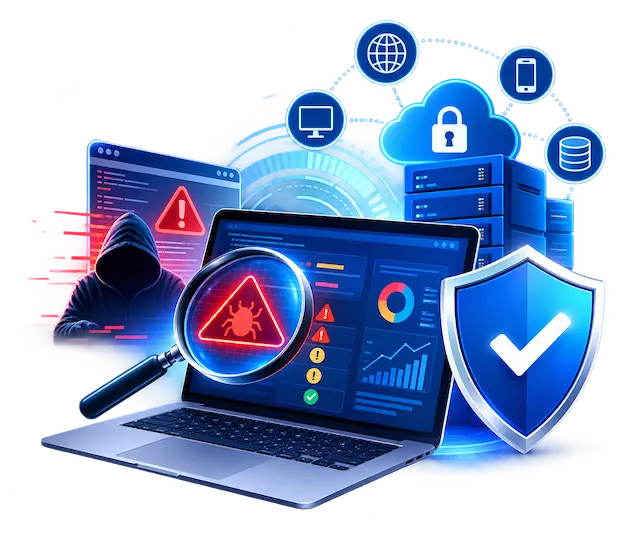
Intelligence-Led Penetration Testing simulates targeted, real-world cyberattacks using relevant threat intelligence, adversary tactics, stealth techniques, and multi-stage attack scenarios. Unlike traditional penetration testing that primarily identifies vulnerabilities, Condition Zebra’s approach evaluates the entire attack journey—from reconnaissance and initial access to lateral movement and objective achievement—while testing your organisation’s ability to detect, respond, and contain the attack.

PROFILE
Understand the Threat
Use threat intelligence to identify relevant adversaries, attack techniques, and scenarios based on your organisation’s industry and risk profile.
ADVANCE
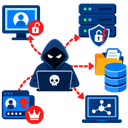
Move Through the Environment
Escalate privileges, establish persistence, bypass security controls, and simulate lateral movement while testing defensive visibility.

RECON
Map the Target
Conduct OSINT and reconnaissance to identify exposed assets, people, systems, technologies, and potential entry points.

ACHIEVE
Test Critical Objectives
Attempt agreed objectives such as accessing sensitive information, compromising critical systems, or reaching business-critical assets.
INFILTRATE
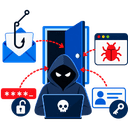
Gain Initial Access
Simulate realistic entry techniques such as phishing, exploitation, credential attacks, and other authorised attack vectors.
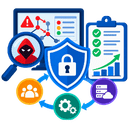
STRENGTHEN
Evaluate & Improve Defences
Analyse attack paths, detection gaps, response performance, and security controls, then provide actionable recommendations to strengthen people, processes, and technology.
More Than Finding Vulnerabilities. Test Your Ability to Stop a Real Attack.
Threat Intelligence • Network Exploitation • Web Applications • Endpoints • Phishing • Social Engineering • Physical Security
Scope of Engagement
Red Teaming can cover multiple attack vectors:
Technical Attacks
- External and Internal Network Exploitation
- Web Application Attacks
- Endpoint Compromise
-
Human Attacks
- Phishing Campaigns
- Social Engineering (Email / Voice)
Physical (Optional)
- On-site intrusion attempts
- Badge cloning or tailgating scenarios
Our Red Team Methodology
We follow a structured, intelligence-driven approach:
1. Planning & Objectives
- Define attack goals (e.g., data exfiltration, domain takeover)
- Establish rules of engagement
2. Reconnaissance
- Gather open-source intelligence (OSINT)
- Identify attack surfaces and targets
3. Initial Access
- Phishing, exploitation, or credential attacks
4. Lateral Movement & Persistence
- Escalate privileges
- Move across systems undetected
5. Objective Achievement
- Simulate real attacker goals
6. Reporting & Debrief
- Detailed findings and blue team performance evaluation
Key Features
- Stealth-Based Testing
Designed to avoid detection and test real response capability - Multi-Vector Attack Simulation
Combines technical, human, and optional physical attacks - Detection & Response Evaluation
Measures effectiveness of your SOC and security tools - Threat Intelligence Integration
Based on current attack trends and adversary tactics - Executive-Level Insights
Clear reporting for both technical teams and leadership
Benefits of Red Teaming
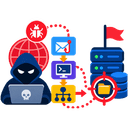
Validate Real-World Attack Scenarios
Simulate realistic, multi-stage cyberattacks based on relevant threat intelligence and adversary techniques to understand how your organisation would perform against an actual targeted attack.
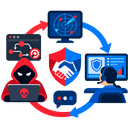
Strengthen Red & Blue Team Coordination
Improve collaboration between offensive and defensive security teams by demonstrating attack techniques, identifying defensive gaps, and strengthening response processes.

Identify Detection & Response Gaps
Uncover weaknesses across security monitoring, detection controls, processes, and response capabilities that may allow attackers to operate undetected.
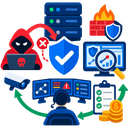
Validate Security Investments
Determine whether existing security technologies, controls, SOC capabilities, and security processes are effectively detecting and preventing sophisticated attack techniques.

Improve Incident Response Readiness
Test how effectively security teams investigate, escalate, contain, and respond to realistic attack activity before facing a real security incident.

Strengthen Overall Cyber Resilience
Turn lessons from simulated attacks into actionable improvements across people, processes, and technology, helping your organisation become better prepared to detect, respond to, and withstand advanced cyber threats.
Frequently Asked Questions (FAQs)
1. What is Intelligence-Led Penetration Testing ?
Intelligence-Led Penetration Testing is an advanced security assessment that uses real-world threat intelligence and adversary tactics to simulate targeted cyberattacks against your organisation. It evaluates how effectively your people, processes, and security controls can detect, respond to, and withstand realistic attacks.
2. How is Intelligence-Led Penetration Testing different from traditional VAPT ?
Traditional VAPT focuses primarily on identifying and validating vulnerabilities, while Intelligence-Led Penetration Testing is goal-oriented and evaluates an attack from end to end. It tests whether an attacker could gain initial access, escalate privileges, move laterally, bypass controls, and achieve specific objectives.
3. What attack techniques can be included in the assessment ?
Depending on the agreed scope, testing can include network and application exploitation, endpoint compromise, credential attacks, phishing, email or voice-based social engineering, and optional physical security scenarios.
4. Will our security team know the assessment is taking place ?
The engagement can be conducted as either a covert exercise, where selected defenders are unaware of the test, or an informed exercise where designated personnel know it is taking place. The approach and rules of engagement are agreed before testing begins.
5. How does threat intelligence influence the testing ?
Threat intelligence helps identify relevant threat actors, tactics, techniques, and procedures (TTPs) based on your organisation’s industry and risk profile. These insights are used to develop realistic attack scenarios, with techniques mapped to frameworks such as MITRE ATT&CK.
6. What will we receive after the assessment ?
You will receive a comprehensive report covering the attack narrative, techniques used, systems or data reached, attack paths, detection and response performance, and identified security gaps. Condition Zebra also provides actionable recommendations to improve security controls, detection capabilities, processes, and overall cyber resilience.
Why Choose Condition Zebra
Local cybersecurity expertise backed by intelligence-led methodologies, realistic adversary simulation, experienced offensive security professionals, threat intelligence, and actionable defensive insights to help organisations understand how well their security can withstand sophisticated real-world attacks.

Intelligence-Led Expertise
Experienced cybersecurity professionals simulate relevant threat actors and real-world adversary behaviours to evaluate your organisation’s security against targeted attack scenarios.

Realistic Attack Simulation
Go beyond traditional penetration testing with stealth-based, multi-stage attack scenarios that test technical controls, people, processes, and response capabilities across the entire attack chain.

Threat-Informed Testing
Use relevant threat intelligence and MITRE ATT&CK-aligned techniques to develop realistic attack scenarios based on your organisation’s industry, risk profile, and potential adversaries.

Detection & Response Validation
Evaluate how effectively your security controls and teams detect, investigate, contain, and respond to simulated attacks, revealing defensive gaps and opportunities for improvement.

Trusted Security Partner
Local expertise backed by 10+ years of cybersecurity experience and CREST accreditation since 2020, with comprehensive attack narratives, detection and response analysis, actionable recommendations, and support to strengthen your organisation’s overall cyber resilience.