
Network Resilience Assessment (NRA)

Network Resilience Assessment Overview
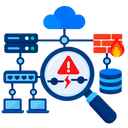
Network Resilience Assessment evaluates how effectively your network can withstand, respond to, and recover from cyberattacks, system failures, misconfigurations, and unexpected disruptions. We assesses your network architecture, security controls, monitoring capabilities, redundancy, and recovery readiness to uncover resilience gaps and provide actionable recommendations that help keep critical operations running.

DISCOVER
Understand Your Network Environment
Identify critical assets, network architecture, dependencies, connectivity, business requirements, and existing security and resilience controls.

VALIDATE
Test Resilience & Recovery
Evaluate how effectively existing controls, failover mechanisms, backup network paths, and recovery capabilities can maintain operations during adverse conditions.

ASSESS
Evaluate Network Resilience
Review network architecture, segmentation, firewalls, access controls, redundancy, high availability, remote access, monitoring, and other critical configurations.

PRIORITISE
Evaluate Risk & Business Impact
Assess identified weaknesses based on likelihood, severity, operational impact, and business criticality so your teams can focus on the most important resilience gaps first.
IDENTIFY
Find Resilience Gaps
Uncover single points of failure, weak segmentation, configuration issues, monitoring gaps, inadequate redundancy, and other weaknesses that could increase disruption or security risk.

STRENGTHEN
Improve Network Resilience
Provide actionable recommendations to improve segmentation, redundancy, security controls, monitoring, failover, recovery, and overall network resilience.
Network Architecture & Design • Security Controls
• Monitoring & Visibility
• Resilience & Recovery
Reduce Downtime • Limit Lateral Movement • Improve Detection • Strengthen Failover • Maintain Business Continuity
Scope of Assessment
We assess network resilience across multiple layers of your IT environment:
Network Architecture & Design
- Network topology review
- Segmentation (VLANs, zones, micro-segmentation)
- Redundancy and failover design
- High availability configurations
-
Security Controls
- Firewall and IPS/IDS configurations
- Access control policies
- Network access control (NAC)
- VPN and remote access security
Monitoring & Visibility
- SIEM and logging capabilities
- Network traffic monitoring
- Alerting and escalation processes
- Threat detection effectiveness
-
Resilience & Recovery
- Failover testing (where applicable)
- Backup network paths
- Disaster recovery readiness
- Incident response integration
Our Methodology
Discovery
Understand your network architecture, business needs, and critical assets
Assessment
Perform technical review and resilience testing
Analysis
Identify weaknesses, risks, and potential impact
Reporting
Deliver detailed findings with risk ratings
Recommendations
Provide actionable steps to improve resilience
Key Benefits
- Reduced Downtime
Ensure continuous operations even during incidents - Stronger Security Posture
Prevent attackers from moving across your network - Improved Incident Response
Detect and respond to threats faster - Enhanced Business Continuity
Validate failover and recovery capabilities - Compliance Support
Align with frameworks such as ISO 27001, NIST, and industry best practices
Frequently Asked Questions (FAQs)
1. What is a Network Resilience Assessment (NRA) ?
A Network Resilience Assessment evaluates your organisation’s ability to maintain network availability, security, and business operations during cyberattacks, system failures, misconfigurations, and other disruptions.
2. What areas are covered during the assessment ?
The assessment can cover network architecture, segmentation, firewalls, access controls, redundancy, high availability, monitoring, logging, failover mechanisms, backup network paths, and recovery capabilities.
3. How is NRA different from Penetration Testing ?
Penetration Testing focuses primarily on identifying and exploiting security vulnerabilities. NRA takes a broader approach by assessing whether your network can withstand disruption, limit the impact, maintain availability, and recover effectively.
4. Will the assessment disrupt our network operations ?
The assessment is designed to minimise disruption to normal business operations. Any resilience or failover testing that could affect production systems will be carefully scoped and agreed upon before testing.
5. What will we receive after the assessment ?
You will receive an executive summary, detailed technical findings, risk prioritisation, network resilience insights, and an actionable remediation roadmap to address identified weaknesses and improve resilience.
6. How often should a Network Resilience Assessment be conducted ?
NRA should be conducted periodically and whenever significant changes occur to your network, such as infrastructure upgrades, cloud migration, new sites, major configuration changes, or changes to critical business systems.
Why Choose Condition Zebra
Local cybersecurity expertise backed by experienced security professionals, real-world resilience testing, vendor-neutral assessment, and practical recommendations to help organisations identify network weaknesses, reduce disruption risks, and strengthen business continuity.

Real-World Expertise
Assess your network against realistic cyberattack, system failure, and disruption scenarios to identify weaknesses that could affect availability, security, and critical business operations.

Practical Recommendations
Receive clear, actionable recommendations to improve network segmentation, redundancy, failover, monitoring, security controls, and recovery capabilities based on identified risks.

Vendor-Neutral Approach
Our assessments remain independent and technology-agnostic, focusing on your organisation’s actual security and resilience requirements rather than specific products or vendors.

Certified Security Professionals
Experienced cybersecurity professionals with expertise in enterprise networks, security architecture, resilience, and risk assessment, delivering comprehensive evaluations across complex IT environments.