Threat Intelligence
Identify Emerging Threats. Understand Adversaries. Strengthen Your Defence.
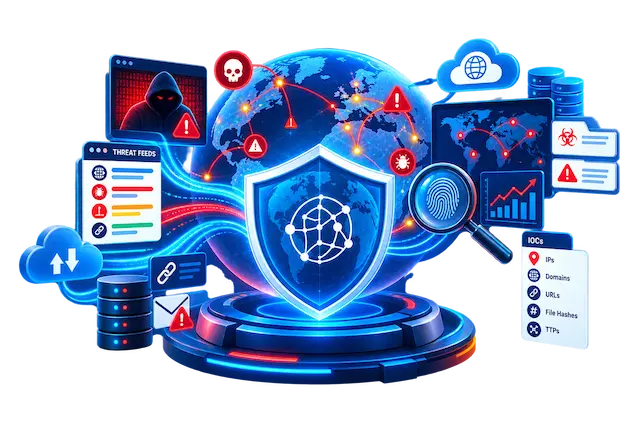
Threat Intelligence Overview
Know the Threats. Anticipate the Attack.
Continuous Threat Intelligence that monitors, analyses, and contextualises emerging cyber threats, attacker activity, vulnerabilities, and indicators of compromise to help your organisation identify risks earlier, make informed security decisions, and strengthen proactive defence.
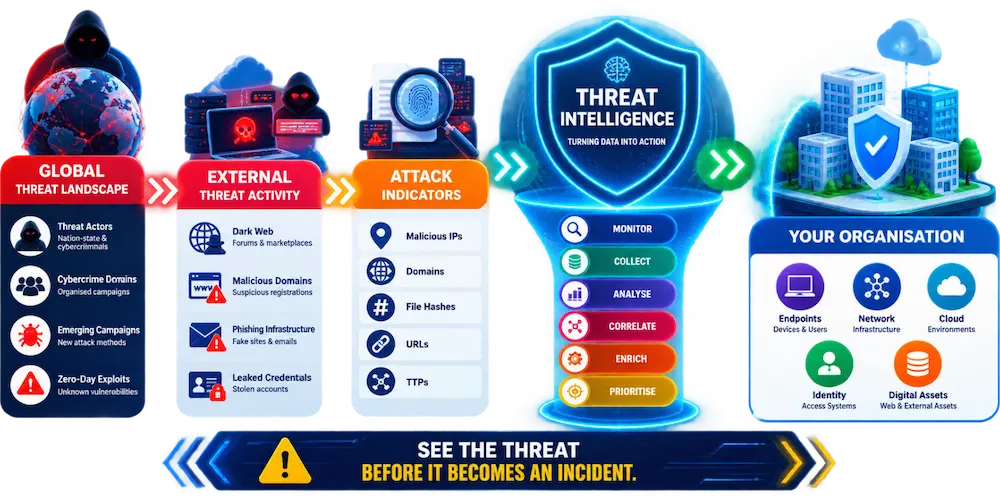
MONITOR
Track emerging threats continuously
CORRELATE
Connect threats to your environment

COLLECT
Aggregate intelligence from multiple sources
ENRICH
Add attacker, IOC and TTP context

ANALYSE
Identify suspicious patterns and behaviours
PRIORITISE
Focus attention on the most relevant risks
Intelligence Sources
- Global Threat Feeds
- Indicators of Compromise
- Dark Web & Digital Risk
- Attack Surface Intelligence
- Threat Actor Intelligence
- Internal Security Signals
Security Outcomes
- Earlier Threat Identification
- Greater Threat Context
- Better Risk Prioritisation
- Proactive Defence
The Threat Landscape
Cyber threats are evolving faster than traditional security approaches can keep pace with. Attackers continuously change their tactics, infrastructure, and techniques, using phishing, malware, stolen credentials, zero-day exploits, and targeted campaigns to bypass security controls and compromise organisations.
Without timely and relevant threat intelligence, organisations may struggle to understand which threats pose the greatest risk and where attackers may strike next. Threat Intelligence provides visibility into emerging threats, malicious indicators, attacker behaviour, external exposures, and evolving attack techniques—helping security teams anticipate threats, prioritise risks, and take proactive action before they escalate into incidents.
83%
OF ORGANISATIONS EXPERIENCED MORE THAN ONE DATA BREACH
Evolving Threat Landscape
Cyber threats continuously evolve as attackers adopt new tactics, infrastructure, and techniques. Without timely threat intelligence, organisations may struggle to identify emerging threats and understand which risks require immediate attention.
24/7
CONTINUOUS THREAT MONITORING & ANALYSIS
Around-the-Clock Threat Visibility
Cyber threats can emerge at any time. Threat Intelligence continuously monitors global and internal threat signals, helping identify malicious indicators, emerging campaigns, and suspicious activities before they escalate.
Context Matters
RAW THREAT DATA ALONE IS NOT ENOUGH
Actionable Threat Intelligence
Threat data becomes valuable when it is analysed and placed into context. Threat Intelligence correlates indicators, attacker activity, vulnerabilities, and risk exposure to help organisations prioritise relevant threats and make informed security decisions.
24/7
INTELLIGENCE-DRIVEN THREAT VISIBILITY
Threat Intelligence
Threat Intelligence combines global intelligence feeds, continuous monitoring, behavioural analysis, IOC management, and external threat monitoring to provide actionable insights that help your organisation anticipate, understand, and respond to evolving cyber threats.
Key Threat Intelligence Capabilities
1. Collect & Monitor
Continuously gather intelligence and monitor internal and external sources for emerging threats.
🔴 Global Threat Intelligence Feeds
Access intelligence from multiple global sources.
-
- Aggregate threat data from multiple intelligence feeds
- Continuously track emerging threats and campaigns
- Correlate threat indicators across environments
🔴 Indicators of Compromise (IOC) Management
Detect and act on known threat indicators.
-
- Monitor malicious IPs, domains, and file hashes
- Integrate IOCs with security controls for automated blocking
- Continuously enrich and validate threat indicators
- Monitor malicious IPs, domains, and file hashes
🔴 External Threat Monitoring & Digital Risk Protection
Monitor threats outside your organisation.
-
- Monitor the dark web, leaked credentials, and exposed data
- Identify brand, domain, and digital asset abuse
- Detect external threats targeting your organisation early
- Monitor the dark web, leaked credentials, and exposed data
2. Analyse & Contextualise
Turn raw threat information into meaningful intelligence by understanding behaviour, attack relationships, and attacker techniques.
🔴 Threat Detection & Behavioral Analysis
Identify sophisticated and unknown threats.
-
- Apply behavioral analytics and anomaly detection
- Detect unusual patterns across endpoints and networks
- Identify advanced and evasive attack techniques
- Apply behavioral analytics and anomaly detection
🔴 Attack Surface & Threat Correlation
Understand how threats relate to your environment.
-
- Correlate threats across systems and users
- Identify attack paths and potential impact
- Prioritise threats based on risk exposure
- Correlate threats across systems and users
🔴 Threat Intelligence Enrichment
Turn raw data into actionable insights.
-
- Add contextual information around threats and vulnerabilities
- Identify attacker tactics, techniques, and procedures (TTPs)
- Improve threat detection and response accuracy
- Add contextual information around threats and vulnerabilities
3. Prioritise & Inform
Transform intelligence into clear insights that support faster security and business decisions.
🔴 Reporting & Intelligence Insights
Provide clear visibility for technical and executive stakeholders.
-
- Real-time dashboards and threat visibility
- Executive-level reporting and threat summaries
- Trend analysis and threat landscape insights
- Real-time dashboards and threat visibility
Threat Intelligence Coverage

Endpoints & User Devices
Monitor endpoint activity and threat indicators to identify suspicious behaviour and potential compromise.

Identity & Access Systems
Monitor identity-related threats, compromised credentials, suspicious authentication, and account abuse.
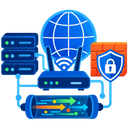
Network Infrastructure & Security Systems
Analyse network and security signals to identify malicious activity, attack patterns, and emerging threats.
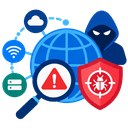
External Digital Footprint
Monitor domains, web assets, dark web activity, exposed credentials, and other external risks targeting your organisation.
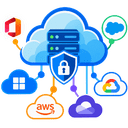
Cloud Platforms & SaaS Applications
Gain threat visibility across cloud environments and SaaS services to identify potential risks and suspicious activities.
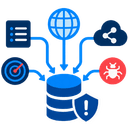
Threat Intelligence Sources & Feeds
Leverage IOCs, threat actor intelligence, emerging campaigns, and global threat feeds to identify and prioritise relevant threats.
Managed Threat Intelligence
What Our MSSP Adds on Top of Threat Intelligence Technology
Threat intelligence platforms provide valuable data — but without expert analysis and response, organisations struggle to turn intelligence into meaningful protection. Our MSSP transforms threat intelligence into a fully managed, actionable defense capability.
1) Monitor & Understand
Continuously monitor the threat landscape and transform signals from multiple sources into relevant intelligence.
🔴 24/7 Threat Monitoring & Analysis
Continuously monitor global and internal threat signals.
- Monitor threat activity around the clock
- Validate and investigate identified threats
✅ Value: Faster detection and reduced false positives
🔴 Threat Correlation & Contextual Analysis
Understand which threats present a genuine risk to your organisation.
- Correlate threats across multiple sources and environments
- Assess threats based on context and exposure
✅ Value: Intelligence you can act on — not just data
🔴 Proactive Threat Hunting
Actively search for threats beyond automated alerts.
- Identify hidden threats before alerts are triggered
- Investigate suspicious patterns and anomalies
✅ Value: Early detection of advanced attacks
2) Prioritise & Act
Turn threat intelligence into targeted action against internal and external risks.
🔴 IOC Prioritisation & Response
Identify which indicators require immediate attention.
- Validate and prioritise indicators of compromise
- Support integration with security controls for action
✅ Value: Faster and more effective response
🔴 External Threat Monitoring & Response
Extend visibility beyond your internal environment.
- Monitor exposed credentials, domains, and brand abuse
- Act on external threats targeting your organisation
✅ Value: Protection beyond your internal environment
3. Optimise & Inform
Continuously improve intelligence capabilities while providing clear visibility to technical and business stakeholders.
🔴 Continuous Improvement & Intelligence Optimisation
Keep intelligence relevant as the threat landscape evolves.
- Adapt intelligence based on emerging threats
- Improve detection capabilities over time
✅ Value: Intelligence that evolves with threats
🔴 Reporting, Visibility & Compliance
Turn intelligence into meaningful security and business insights.
- Provide executive-ready reporting and actionable insights
- Support compliance and governance requirements
✅ Value: Full visibility into your threat landscape
Threat Intelligence vs Managed Threat Intelligence (MSSP)
Threat Intelligence technology collects, analyses, and enriches threat data to provide visibility into emerging threats, malicious indicators, attacker activity, and external risks. Our MSSP adds 24/7 security experts who continuously monitor, validate, correlate, and prioritise threat intelligence, turning raw threat data into actionable insights and response.
Capability Area
Threat Intelligence vs Managed Threat Intelligence- Primary Role
- Threat Visibility
- IOC Management
- Threat Detection
- Threat Correlation
- External Threat Monitoring
- Threat Hunting
- Alerting
- Threat Intelligence Context
- Reporting
- Operational Responsibility
- Outcome
Option 1
Threat Intelligence (Technology)- Collects and processes threat data
- Provides indicators & feeds
- Identifies malicious indicators
- Detects anomalies & suspicious activity
- Limited automated correlation
- Identifies external risks
- Limited or manual
- Generates alerts
- Provides basic context
- Standard dashboards
- Managed by internal teams
- Provides threat data
Option 2
Managed Threat Intelligence (MSSP)- ✅ Provides analysis, correlation & action
- ✅ Context-aware validated insights
- ✅ Prioritises & integrates into response
- ✅ Continuous monitoring & investigation
- ✅ Deep cross-environment correlation
- ✅ Helps monitor & mitigate threats
- ✅ Proactive expert-led hunting
- ✅ Investigates & validates alerts
- ✅ Enriched with real-world insights
- ✅ Executive actionable reporting
- ✅ Fully managed by MSSP
- ✅ Ensures threats are mitigated
Frequently Asked Questions (FAQs)
1. What is Threat Intelligence ?
Threat Intelligence is the process of collecting, analysing, and contextualising information about emerging cyber threats, attacker tactics, malicious indicators, vulnerabilities, and risk exposures. It helps organisations better understand their threat landscape and take proactive action before threats impact operations.
2. What types of cyber threats can Threat Intelligence help identify ?
Threat Intelligence can help identify advanced persistent threats (APTs), phishing campaigns, ransomware, malware, zero-day exploits, credential theft, command-and-control infrastructure, insider threats, data exfiltration, and emerging attacker techniques.
3. What are Indicators of Compromise (IOCs) ?
IOCs are indicators associated with potentially malicious activity, such as malicious IP addresses, domains, and file hashes. Threat Intelligence continuously monitors, validates, and enriches these indicators to help organisations identify and respond to known threats more effectively.
4. Does Threat Intelligence monitor the dark web and external threats ?
Yes. Threat Intelligence can provide visibility beyond your internal environment by monitoring dark-web activity, leaked credentials, exposed data, brand and domain abuse, and other external risks that may target your organisation.
5. How does Threat Intelligence help improve cybersecurity decisions ?
Threat Intelligence adds context to raw security data by correlating threats with your environment, identifying attacker tactics, techniques, and procedures (TTPs), and assessing potential impact. This helps security teams prioritise relevant risks and make faster, more informed decisions.
6. What is the difference between Threat Intelligence and Managed Threat Intelligence ?
Threat Intelligence technology primarily provides threat data, indicators, feeds, and security context. Managed Threat Intelligence adds expert-led monitoring, validation, correlation, prioritisation, threat hunting, and actionable guidance, helping transform raw intelligence into meaningful security outcomes while reducing the operational burden on internal teams.
Why Choose Condition Zebra
Local cybersecurity expertise backed by continuous threat intelligence, expert analysis, proactive threat monitoring, actionable insights, and trusted security practices.

Security Expertise
Experienced cybersecurity professionals analysing threat intelligence to identify emerging threats, attacker activity, and risks relevant to your organisation.

24/7 Threat Monitoring
Continuous monitoring of global and internal threat signals to identify emerging threats, malicious indicators, and suspicious activity.

Actionable Intelligence
Transform raw threat data into contextual, prioritised intelligence that helps your organisation make faster and more informed security decisions.

Proactive Protection
Identify emerging threats, malicious indicators, exposed credentials, external risks, and suspicious activity before they escalate into security incidents.

Trusted Security Partner